
01
Soil
A region is chosen for one spice, on the strength of its climate and its growers.

INFOTOM / Craft & Factory
Sourcing well is only half of it. What happens between the sack arriving and the pack being sealed decides whether the spice on the shelf still tastes like the spice in the field.
Under one roof
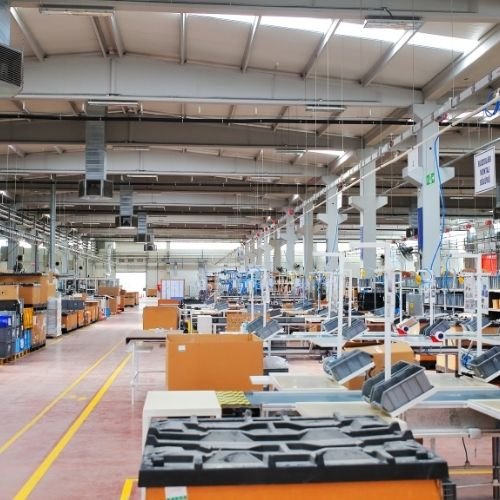
Every stage after the farm happens in a facility we control and staff ourselves. It is a deliberate choice and an expensive one: job-working the grinding out to whoever has capacity this week is cheaper, and it is exactly how a lot loses its identity.
Material is received against its lot, cleaned, graded, milled to specification, blended where a recipe calls for it, checked, and packed. The same people see a lot at the start and at the end.
The process
Eight stages
01
A region is chosen for one spice, on the strength of its climate and its growers.
02
We contract directly with farmers ahead of the season, and return the following year.
03
Lots are selected at the farm and moved without passing through open markets.
04
Destoning, de-dusting and gravity separation strip out everything that is not spice.
05
Grading by size, colour and density. Anything off-grade leaves the line here.
06
Controlled grinding so the aromatic oils are not lost to heat.
07
Where a blend is called for, components are roasted and combined to a fixed recipe.
08
Sealed against light, air and moisture, and marked with its origin.
How we work
The details
01
Destoning, de-dusting and gravity separation happen first. Grinding stones and stalks into a powder only hides them.
02
Size, colour and density decide the grade. Off-grade material leaves the line rather than being quietly averaged into the batch.
03
Grinding makes heat, and heat drives off the volatile oils that carry the smell. The mill is set to protect them.
04
In a blend, each spice reaches its own point at its own time. Roasting them together means most of them are wrong.
05
Incoming material, in-process, and finished pack. A single check at the end tells you far too late.
06
Ground spice starts losing aroma the moment it is milled, so the gap between mill and seal is kept short.
07
The region is printed on the pack. It is only worth sourcing this way if the buyer can see it.
Anyone can buy a good spice. Keeping it good is the work.
Talk to us
Retail, distribution, e-commerce, quick commerce, HORECA, private label, ingredient supply, export or import — tell us what you need and who you serve, and we will come back with the right specification and pack.